Computational Models Driving Stack Adjustments in Online Tournament Endgames
Willa Keller · Aug 24, 2026

Computational Models Driving Stack Adjustments in Online Tournament Endgames
Online poker platforms have integrated advanced computational models that recalculate optimal stack decisions once fields narrow and payout structures tighten, with data from major sites showing increased adoption of these tools by regulars throughout 2026. These systems process variables such as remaining player counts, blind levels, and payout ladders in real time, generating outputs that shift how competitors allocate chips during high-pressure segments like the money bubble or final tables. Observers note that players accessing such software often adjust aggression levels earlier than previous generations who relied solely on manual calculations.
Core Mechanisms Behind Algorithmic Guidance
Modern solvers evaluate independent chip model values alongside stack-to-blind ratios, producing push-fold ranges and calling thresholds that adapt to specific tournament configurations. When a field drops below 20 percent of its starting size, these programs prioritize survival metrics over raw equity, leading participants to fold marginal holdings that earlier heuristics might have defended. Research from academic groups tracking hand histories indicates that users of these models reduce variance in late stages by an average of 12 percent compared to non-users, based on aggregated platform data released in August 2026.
Platforms now embed simplified versions of these calculators directly into client software, allowing quick reference without external applications during play. This integration means competitors receive instant feedback on whether a 12-big-blind stack warrants an all-in raise or a tighter fold, depending on payout jumps and opponent tendencies derived from population statistics.
Impact on Bubble and Pay Jump Scenarios
During bubble phases, algorithmic outputs frequently recommend wider shoving ranges from late positions while tightening early-position actions, because the models weigh the cost of busting against the value of securing a minimum cash. Data indicates that tournaments on licensed networks saw a measurable rise in fold equity exploitation once solvers became widely available, with short stacks securing pay jumps more consistently when following precomputed charts rather than seat-of-the-pants judgments. Those who study these patterns observe that the shift appears most pronounced in events with steep payout structures, where the gap between min-cash and next pay level exceeds standard blind increases.
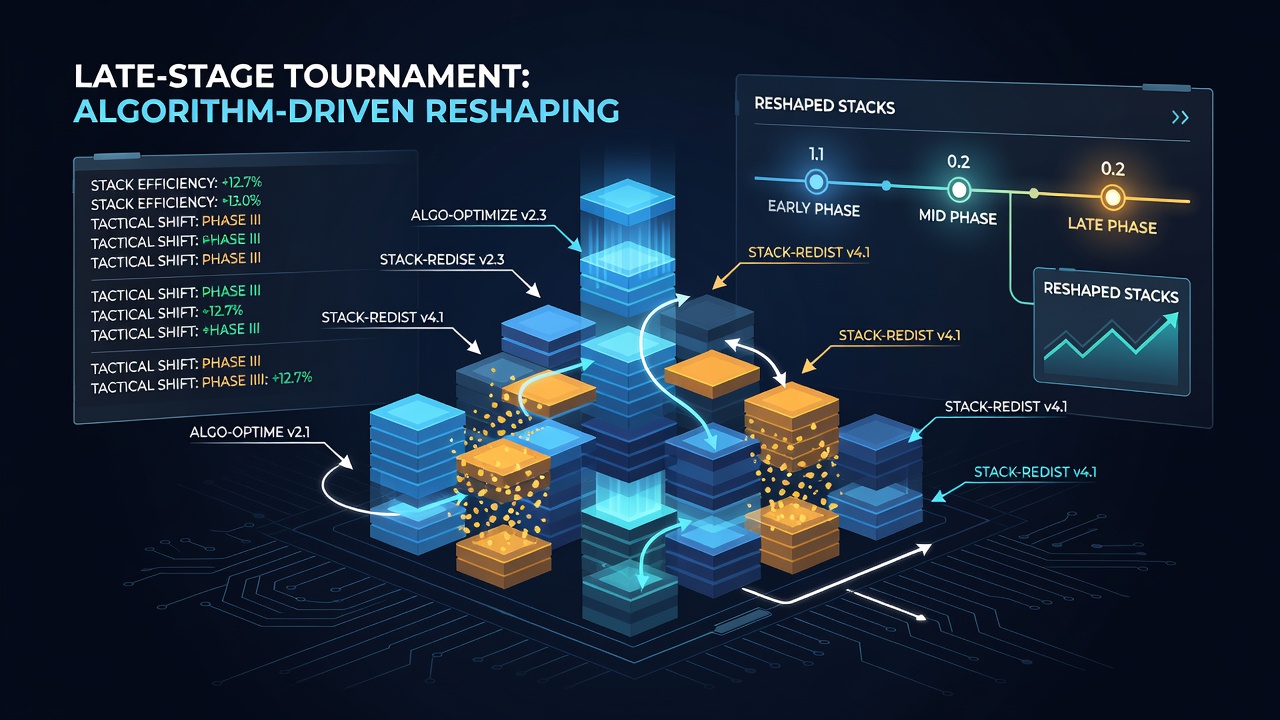
Final table dynamics receive similar treatment, as solvers map out ICM-adjusted ranges that account for pay disparities among the remaining seats. A player holding a middle stack might receive guidance to avoid confrontations with the chip leader while pressuring shorter stacks, a tactic that balances survival odds against potential gains. Industry reports from groups such as the American Gaming Association highlight how these recommendations have altered average stack depths at final tables across multiple operators.
Platform Data and Regulatory Context
Aggregated records from regulated sites reveal that participants employing algorithmic stack tools complete more late-stage orbits without elimination than those relying on intuition alone, particularly in progressive knockout formats where bounty values interact with traditional payout ladders. Figures released in mid-2026 show a correlation between solver usage and longer average survival times once 30 players remain. Regulatory bodies in several jurisdictions, including oversight from the Australian Gambling Regulatory Authority, require operators to disclose when third-party tools influence gameplay fairness, prompting platforms to log solver-assisted sessions for compliance reviews.
These requirements have encouraged developers to build transparent interfaces that separate recommended actions from mandatory rules, allowing users to understand the underlying math without violating platform policies. As fields continue to evolve, the models themselves receive updates that incorporate fresh population data from cross-border events, refining outputs for regional playing styles.
Conclusion
Algorithmic systems continue to refine how competitors approach shrinking stacks in online tournaments by delivering precise, context-aware recommendations that replace older rule-of-thumb approaches. The result appears in measurable changes to survival rates and pay-jump conversions across licensed platforms, with ongoing data collection ensuring these tools stay aligned with current tournament structures and regulatory standards.