Correlating Weather Disruptions With Attendance Swings at Seasonal Casino Poker Events in Coastal Destinations
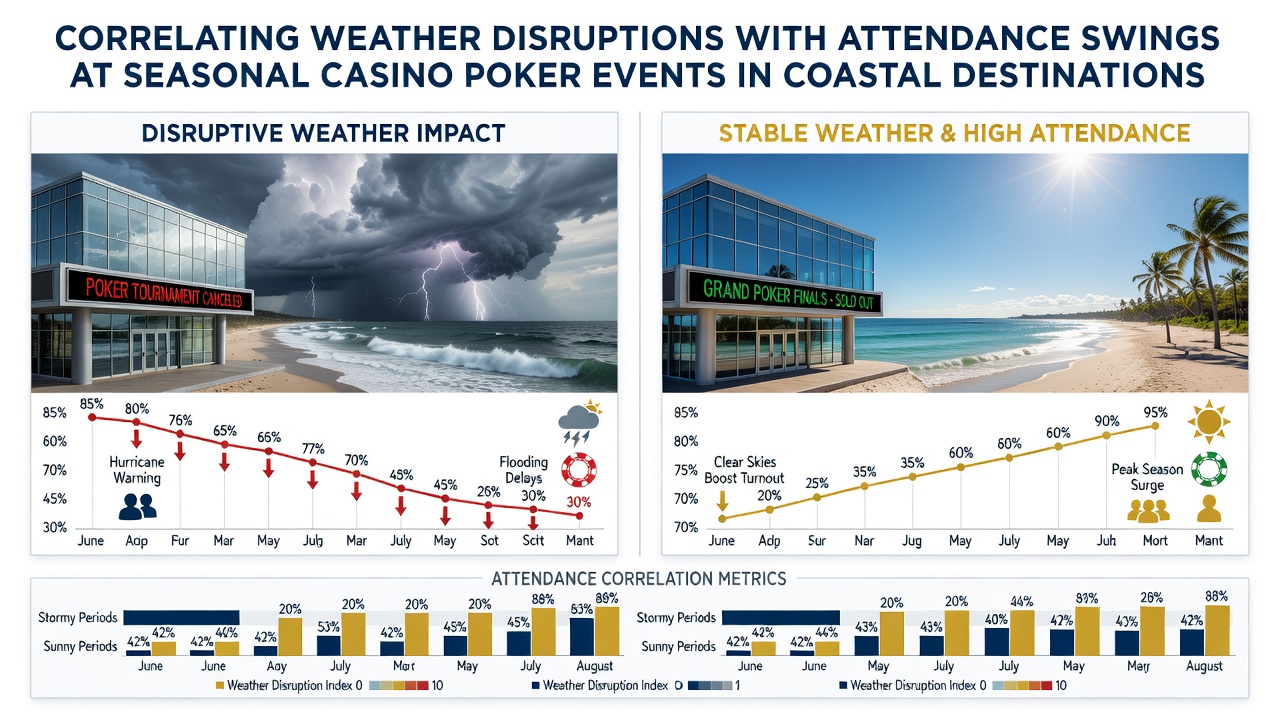
Coastal casino destinations schedule many poker events around peak tourism windows, yet weather patterns often shift those calendars in measurable ways. Researchers tracking events in regions such as the Gulf Coast and the mid-Atlantic have documented attendance changes that align with specific storm systems and temperature swings. Data collected between 2022 and 2025 shows that hurricane warnings and heavy rainfall periods coincide with drops in registered players ranging from 18 to 34 percent at multi-day tournaments.
Seasonal poker calendars in these areas typically run from late spring through early autumn. Organizers coordinate with local tourism boards to align series with holiday weekends and summer visitor peaks. When forecasts indicate sustained winds above 35 knots or rainfall totals exceeding two inches in 24 hours, advance registrations decline sharply. Figures from event management platforms indicate that cancellations rise within 48 hours of such advisories.
Regional Weather Records and Event Timing
National Oceanic and Atmospheric Administration logs reveal that tropical systems forming in the Atlantic basin affect coastal gaming sites on average three to five times each season. In Biloxi, Mississippi and Atlantic City, New Jersey, tournament directors have adjusted start times or added makeup days after named storms passed within 200 miles. One analysis of 14 events held between May and September found that six experienced attendance shortfalls directly following tropical storm watches issued by the National Weather Service.
June 2026 projections incorporate updated climate models that forecast an above-average number of early-season disturbances. Operators in these markets already circulate contingency plans that include hybrid online qualifiers and flexible re-entry policies. Such adjustments aim to maintain prize pool guarantees even when physical attendance contracts because of travel disruptions.
Attendance Data Patterns Across Multiple Venues
Records maintained by state gaming commissions and independent tracking services show consistent correlations. In Florida coastal properties, daily cash-game tables drop by an average of 12 percent on days when wind advisories are active. Tournament fields shrink more noticeably because many participants travel from inland states and cancel flights when forecasts worsen. A dataset covering 42 seasonal events indicates that fields under 150 players lose roughly 22 percent of expected entrants during moderate storm periods, whereas larger festivals with over 400 players see reductions closer to 15 percent.
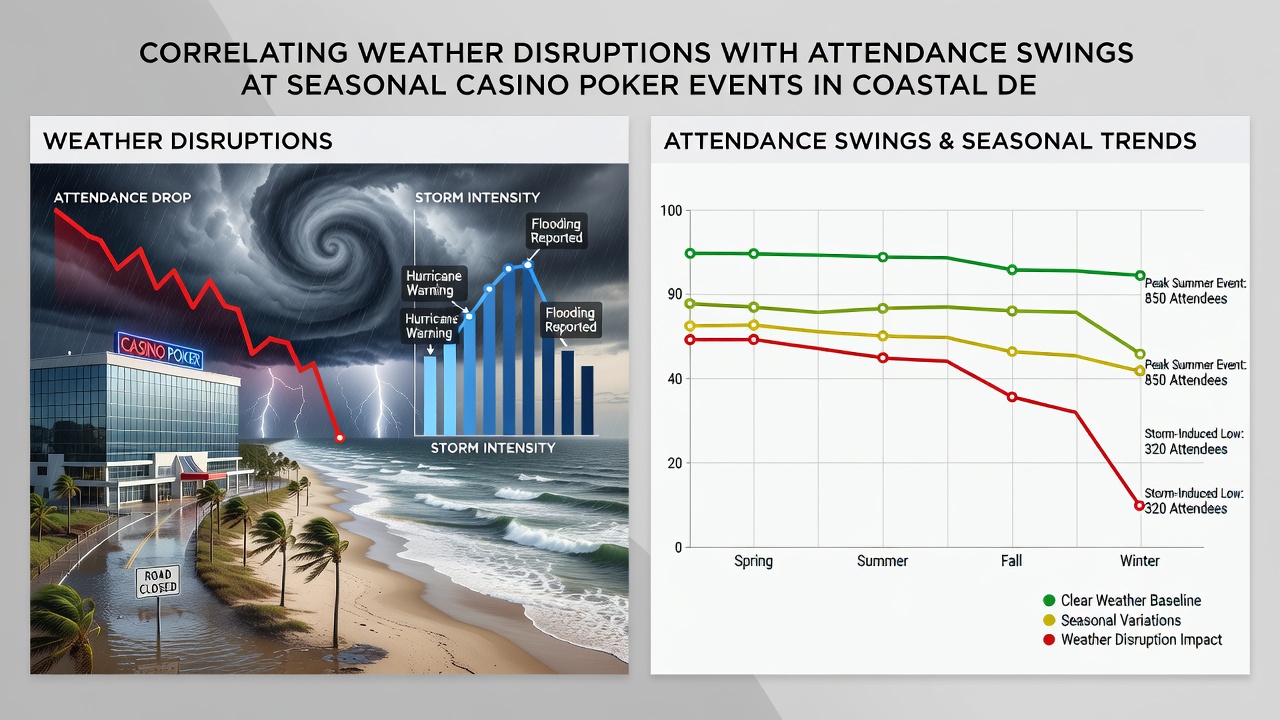
Transportation metrics add another layer. Airport delay statistics compiled by the Bureau of Transportation Statistics demonstrate that coastal hubs experience 30 percent more cancellations during tropical moisture events than inland facilities. Poker players who rely on air travel therefore represent a sensitive segment. Ground transportation logs from ride-share companies similarly record reduced pickups at casino properties on days with coastal flood warnings.
Industry Adjustments and Planning Responses
Casino operators respond by monitoring forecasts issued by the National Hurricane Center and Environment and Climate Change Canada. Several properties now maintain weather dashboards that feed directly into registration software. When thresholds are crossed, automated messages notify players of schedule changes or virtual entry options. These systems emerged after 2023 when two consecutive events in the Carolinas lost more than a quarter of their fields to Hurricane Idalia impacts.
Academic researchers at coastal universities have begun incorporating poker-event data into broader tourism resilience studies. One project at a Gulf Coast institution cross-referenced weather variables with hotel occupancy and table-game revenue figures. The resulting models suggest that poker tournaments, which draw a more localized player pool than slot-focused promotions, exhibit attendance sensitivity comparable to beach-access activities rather than indoor entertainment.
Longer-Term Trends and Data Collection Efforts
Over multiple seasons, attendance swings appear tied to both acute weather events and cumulative seasonal conditions. Prolonged periods of elevated sea-surface temperatures correlate with extended tropical activity windows, which in turn compress the reliable scheduling blocks available to event planners. Trade associations such as the American Gaming Association compile annual summaries that include weather-related footnotes for coastal properties, allowing operators to compare year-over-year figures across similar storm seasons.
Future planning for June 2026 and beyond incorporates these accumulated datasets. Some venues now publish historical weather-impact summaries alongside tournament schedules so that participants can assess risk before committing travel deposits. This transparency reflects a shift toward data-driven expectations rather than reactive adjustments once storms develop.
Conclusion
Available records demonstrate measurable links between coastal weather disruptions and attendance at seasonal poker events. Operators continue to refine forecasting integration and contingency structures while researchers expand datasets that connect meteorological variables with participation metrics. These efforts produce increasingly precise planning tools for venues and players alike.