How Blockchain Verification Systems Are Influencing Trust Factors in Online Casino Poker Offerings

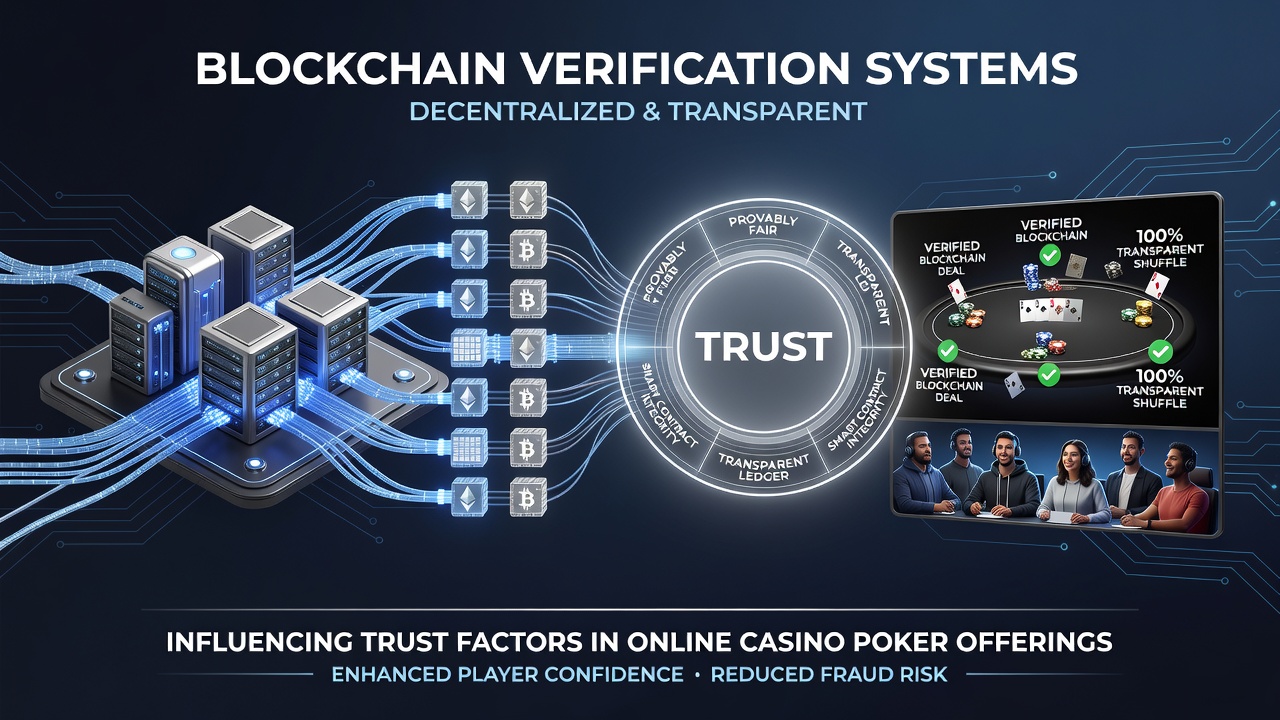
Blockchain verification systems have started integrating into online casino poker platforms where they record every shuffle, deal, and bet on distributed ledgers that players can audit independently. These systems replace traditional random number generators with cryptographic proofs that confirm game outcomes match predetermined algorithms without alteration after the fact. Platforms adopting this technology publish each hand's hash and seed data so anyone can verify fairness through open-source tools rather than relying solely on operator assurances.
Core Components Driving Verification Processes
Provably fair protocols form the foundation of these verification layers and they combine player-provided seeds with server seeds plus cryptographic hashes to generate card sequences that remain tamper-proof once initiated. Smart contracts execute payouts automatically once conditions such as hand rankings or tournament milestones get met and this automation removes manual intervention points where discrepancies could occur. Data from multiple licensed operators shows transaction settlement times dropping from hours to minutes when blockchain rails handle rake collection and prize distribution simultaneously.
Effects on Player Confidence Metrics
Surveys conducted by independent research groups indicate rising trust scores among users who access real-time audit trails compared with those limited to standard game histories. Players gain the ability to cross-check individual hands against the immutable record which reduces disputes over alleged rigging or software errors. Industry reports reveal that platforms implementing full blockchain verification experienced a measurable uptick in deposit volumes during the first six months after launch as repeat participation increased.
Regulatory bodies in several jurisdictions now require operators to maintain verifiable logs for at least five years and blockchain storage satisfies these mandates while lowering administrative overhead. In preparation for compliance updates scheduled across multiple regions in June 2026 some networks have already migrated entire poker databases onto permissioned chains that allow selective disclosure to auditors without exposing all player data publicly.
Regional Adoption Patterns and Data Trends
European markets have seen faster integration than North American ones because licensing frameworks there accommodate cryptographic verification more readily. One study released by the European Gaming and Betting Association documented that certified platforms using blockchain saw a 27 percent reduction in chargeback rates over traditional setups. Meanwhile operators in Asia-Pacific regions focus on combining these systems with existing payment gateways to address cross-border settlement challenges.
Academic researchers tracking user behavior note that newcomers to online poker cite verifiable fairness as a primary factor when choosing between competing sites. Established players however weigh verification features alongside software speed and bonus structures before committing funds. Aggregated platform data reveals that tables offering blockchain-backed games maintain higher average occupancy rates during peak hours compared with non-verified alternatives.
Challenges in Implementation and Scaling
Latency remains a concern for high-volume tournaments where every second counts and some networks address this by processing verification batches rather than individual hands in real time. Storage costs for full ledger copies also rise as hand volumes grow yet solutions such as sidechains and zero-knowledge proofs help contain expenses while preserving auditability. Operators report that initial development investments pay off through lower customer support tickets related to game integrity questions.
Collaboration between technology providers and gaming associations has produced standardized APIs that simplify integration across different poker variants including Texas Hold'em, Omaha, and mixed-game formats. These standards allow smaller card rooms to adopt verification without building custom infrastructure from scratch.
Conclusion
Blockchain verification continues to expand across online casino poker environments by supplying transparent records that support both player oversight and regulatory compliance. As more jurisdictions align their rules with these technologies the distinction between verified and traditional offerings becomes sharper for participants evaluating platform reliability. Data collected through mid-2026 will likely clarify long-term effects on retention and dispute resolution across the sector.