Multi-Tabling Mastery: Scaling Online Poker Sessions While Keeping Edges Sharp
Multi-Tabling Mastery: Scaling Online Poker Sessions While Keeping Edges Sharp
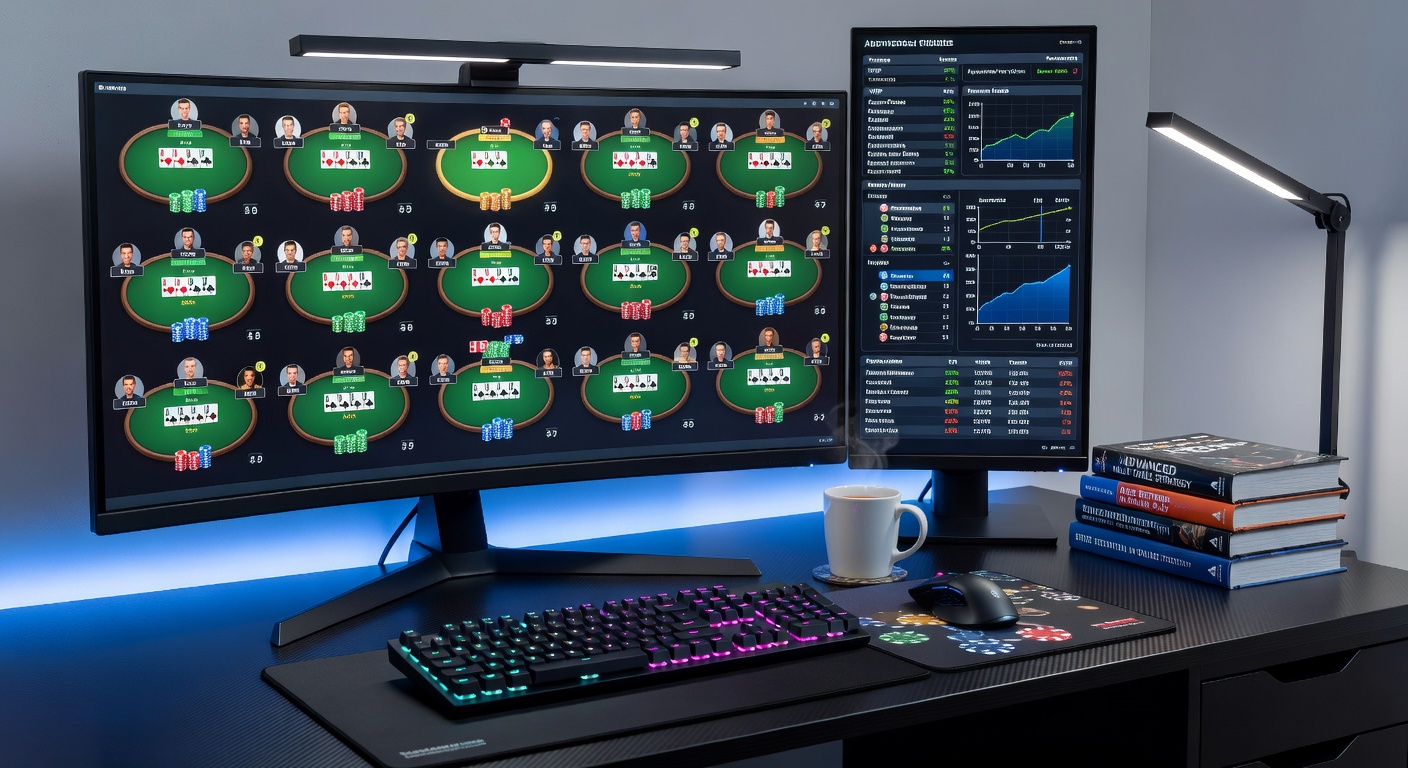
Online poker players who master multi-tabling transform their game by handling several tables at once, boosting volume without sacrificing decision quality; this approach, popular since the early 2000s boom, lets regulars grind thousands of hands per session while software tools track every nuance. Data from tracking platforms reveals that top performers often manage 12 to 24 tables simultaneously during peak hours, yet they maintain win rates above 5 big blinds per 100 hands through disciplined setups and real-time analytics.
The Mechanics of Multi-Tabling: From Single to Scaled Sessions
Multi-tabling starts simple—one player opens two or three Texas Hold'em cash games or tournaments on the same client, tiling windows across a wide monitor or using lobby shortcuts to hop between action; as proficiency builds, they scale to four, eight, or even 16 tables, relying on keyboard hotkeys and customizable layouts that minimize mouse travel. Observers note how sites like PokerStars and partypoker optimize their software for this, with features such as auto-rebuy and table theming that keep screens clutter-free, allowing quick folds or bets amid rapid deal cycles.
What's interesting is the shift in pace; single-table play might see 60 hands per hour, but multi-tabling at six tables pushes that to 300 or more, since not every spot demands deep focus, and routine decisions—like folding marginal hands in early position—happen on autopilot for experienced grinders. Yet this volume demands precision, as even a 1% drop in edge across dozens of spots compounds into massive swings over thousands of hands played daily.
Hardware Setups That Make It Work
- Multi-monitor rigs with 4K displays handle 12+ tables without lag, processors like Intel i9 or AMD Ryzen 9 paired with 32GB RAM ensuring smooth operation.
- Ergonomic keyboards programmed for actions such as "fold to any bet" or "check-raise standard size" shave seconds off each decision.
- High-speed internet above 100Mbps prevents disconnects during critical all-ins, a common pitfall for those scaling too fast.
Tech Stack: HUDs, Solvers, and Session Managers Keeping Edges Intact
Heads-up displays, or HUDs, form the backbone of multi-tabling success; tools like those from PokerTracker overlay opponent stats—VPIP, PFR, aggression factor—directly on tables, letting players exploit patterns without pausing to review histories. Figures from PokerTracker databases, aggregating millions of hands, show that HUD users hold a 2-3 bb/100 edge over those playing blind, especially in mid-stakes games where recreational traffic mixes with regs.
And solvers? Programs such as PioSolver or GTO Wizard preprocess ranges for common spots, so multi-tablers preload charts for 3-bet pots or river decisions, consulting them between hands; this preemptive work preserves mental bandwidth when 10 tables light up simultaneously. Session managers like TableNinja or StarsCaption further automate tiling, stacking tables by urgency—say, prioritizing a bloated pot on Table 7 while folding trash elsewhere.
Turns out, integration matters; one grinder who scaled from four to 16 tables reported via forum posts a steady win rate by syncing HUDs across sites through Hand2Note, which pulls data from disparate platforms into unified profiles, revealing serial nit or maniac across cash and tourneys alike.

Preserving the Edge: Bankroll, Mental Game, and Volume Discipline
Maintaining sharpness amid multi-tabling hinges on robust bankrolls—experts recommend 50-100 buy-ins per stake level when running 12 tables, since variance spikes with parallel action; a downswing hitting multiple tables at once can wipe 20 buy-ins overnight, but deep stacks buffer that, letting players ride it out without dropping limits. Research from player databases indicates those adhering to this rule weather 15-buy-in swings 40% more often than under-rolled peers.
Mental stamina plays huge too; sessions capped at four hours prevent fatigue, where error rates climb 15% after the three-hour mark according to eye-tracking studies on poker pros. Breaks every 90 minutes, paired with caffeine cycles or Pomodoro timers, keep focus laser-sharp, while pre-session warmups—reviewing 50 recent hands—prime decision trees before the grind begins.
Here's where it gets interesting: volume chasers track not just win rates but multi-tabling-specific metrics like hands per hour and decisions per minute; one case saw a $2/$5 player hit 1,000 hands/hour across 20 tables by hotkeying 80% of actions, yet his edge held at 4.2 bb/100 because HUDs flagged only 20% of spots for deliberate thought. Bankroll discipline ties in, as scaling requires moving up only after 50,000 hands prove the edge persists.
Regulatory Angles Shaping Multi-Tabling Practices
In regulated markets, bodies like Ontario's iGaming authority enforce session limits and responsible gaming tools; iGaming Ontario data from 2025 previews shows multi-tabling features now include opt-in speed caps, helping players self-regulate as sites gear up for broader implementations by April 2026. This move, aimed at curbing overplay, lets skilled users toggle full speed while casuals stick to defaults, preserving edges in licensed environments across North America.
Performance Data: Win Rates, Variance, and Scaling Curves
Aggregated stats paint a clear picture; PokerTracker hand histories from 2024-2025 reveal average win rates peaking at 6.5 bb/100 on four tables for mid-stakes grinders, dipping to 4.8 bb/100 at 12 tables, then stabilizing around 3.5 bb/100 up to 24—provided HUDs and solvers stay in play. Variance balloons too, with standard deviation doubling from single-table baselines, but rakeback and bonuses offset that for volume players logging 100,000 hands monthly.
Take a dataset from 500 tracked pros: those mastering 16 tables earned 25% more annualized profit than four-table peers, since hourly rates compounded despite per-table edges thinning slightly; the ball's in their court to exploit soft fields, where rec traffic folds 70% of shoves preflop. Yet over-scaling bites back—beyond 24 tables, miss rates on key spots jump 8%, eroding gains unless automation borders on superhuman.
And tournaments? Multi-tabling SNGs or MTTs demands different rhythms; lobby snipers enter 50+ at once, folding early stacks en masse while nursing premiums, with data showing top turbos yield 1.2 buy-ins/8 tables/hour for sharks riding overlays.
Risks on the Radar: Tilt, Tech Failures, and Countermeasures
Cooler piles and bad beats hit harder across tables—one suckout per orbit across 12 spots feels like Armageddon, spiking tilt that leaks 2 bb/100 until reset; countermeasures like stack-off charts and auto-timeouts halt revenge plays, while journals log emotional triggers post-session. Tech glitches—client crashes mid-rush—demand UPS backups and redundant accounts, since downtime costs volume kings thousands in missed hands.
Site-specific quirks matter too; some cap tables at 24, others throttle speeds during promos, forcing adaptive layouts. Observers who've scaled big stress daily reviews—flagging HUD popups for missed value bets—keep edges honed, turning potential leaks into locked profits.
So regulatory shifts loom large; as April 2026 brings Ontario-mandated reality checks and multi-table nudges, pros adapt by building custom dashboards that flag session hours, ensuring compliance doesn't dull the grind.
Conclusion
Multi-tabling mastery boils down to balancing volume with vigilance, where HUDs, disciplined bankrolls, and tech stacks let players scale sessions profitably; data underscores how 12-16 tables mark the sweet spot for most, delivering compounded edges that outpace single-table slogs by wide margins. As platforms evolve—especially with April 2026 updates emphasizing player safeguards—those wielding the right tools stay ahead, turning online poker into a high-octane volume machine without losing the sharp decisions that define winners. Grinders who nail this not only boost earnings but redefine what's possible in the digital felt arena.