Patterns in Daily Tournament Structures and Their Effect on Recreational Player Participation Rates
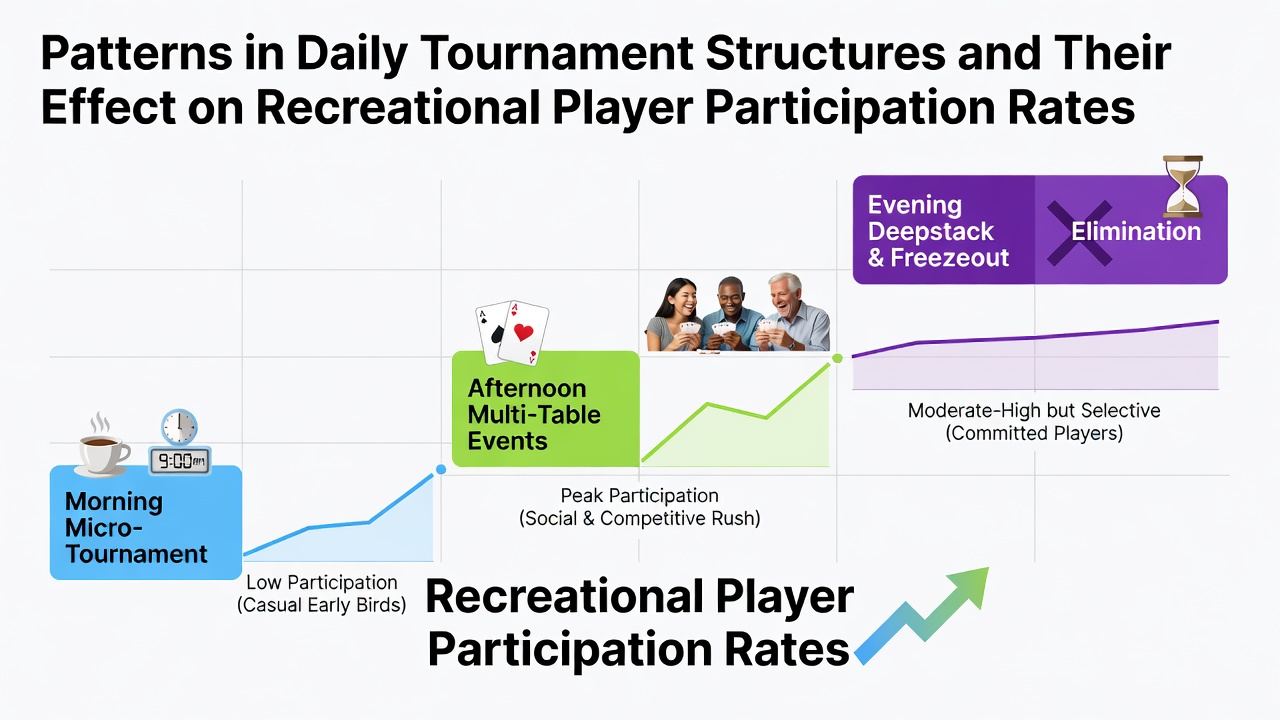
Daily tournament structures in poker rooms and online platforms follow distinct patterns that shape how recreational players decide when and whether to participate, with data from multiple regions showing clear correlations between format choices and entry numbers. Observers note that morning sessions often feature smaller buy-ins and shorter blind levels, while evening events lean toward deeper stacks and higher guarantees, and these differences align with measurable shifts in who shows up and how many total players register.
Research indicates that turbo formats, which compress play into fewer hours, draw higher recreational turnout on weekdays because they fit around work schedules, whereas deep-stack daily events see stronger weekend participation from the same demographic. According to figures released by the Nevada Gaming Control Board, average daily tournament entries rose 12 percent in venues that adjusted start times to 6 p.m. rather than 2 p.m. during 2025, a change that coincided with broader availability of guaranteed prize pools exceeding $10,000.
Common Structural Variations Across Venues
Venues typically cycle through several core structures each week, including freezeouts, re-entry events, and progressive knockout formats, and each carries its own participation signature. Freezeout tournaments without re-entries tend to attract fewer recreational players on Mondays and Tuesdays, while re-entry options see steady increases from the same group later in the week. Data shows that bounty-style daily tournaments maintain consistent registration numbers across both recreational and regular cohorts because the added element of headhunting creates visible payout opportunities that appear more accessible.
Those who track registration software across multiple card rooms report that blind structures progressing every 15 minutes versus every 20 minutes produce different dropout rates among first-time entrants, with the faster pace correlating to quicker exits but not necessarily lower overall sign-ups. In June 2026 several properties in the southwestern United States plan to test hybrid schedules that alternate between 20-minute and 25-minute levels within the same daily series, allowing direct comparison of how pacing influences repeat recreational attendance.
Time-of-Day and Day-of-Week Effects
Participation data collected from licensed operators reveals that recreational players cluster around specific windows, with afternoon daily tournaments showing lower average ages and higher percentages of players logging their first live event of the month. Evening sessions, by contrast, draw a broader mix that includes more experienced locals, yet the absolute number of recreational entries often peaks between 5 p.m. and 7 p.m. because those hours overlap with common work-release times.
Studies compiled by the Australian Institute of Criminology on gaming participation patterns found that daily tournaments scheduled immediately after major sports events experienced measurable upticks in first-time recreational entries, an effect attributed to increased foot traffic rather than any change in prize structures themselves. Venues that maintain consistent start times across an entire month record steadier recreational numbers than those that rotate schedules frequently, suggesting predictability itself functions as a participation driver.
Guarantee Levels and Entry Fee Thresholds
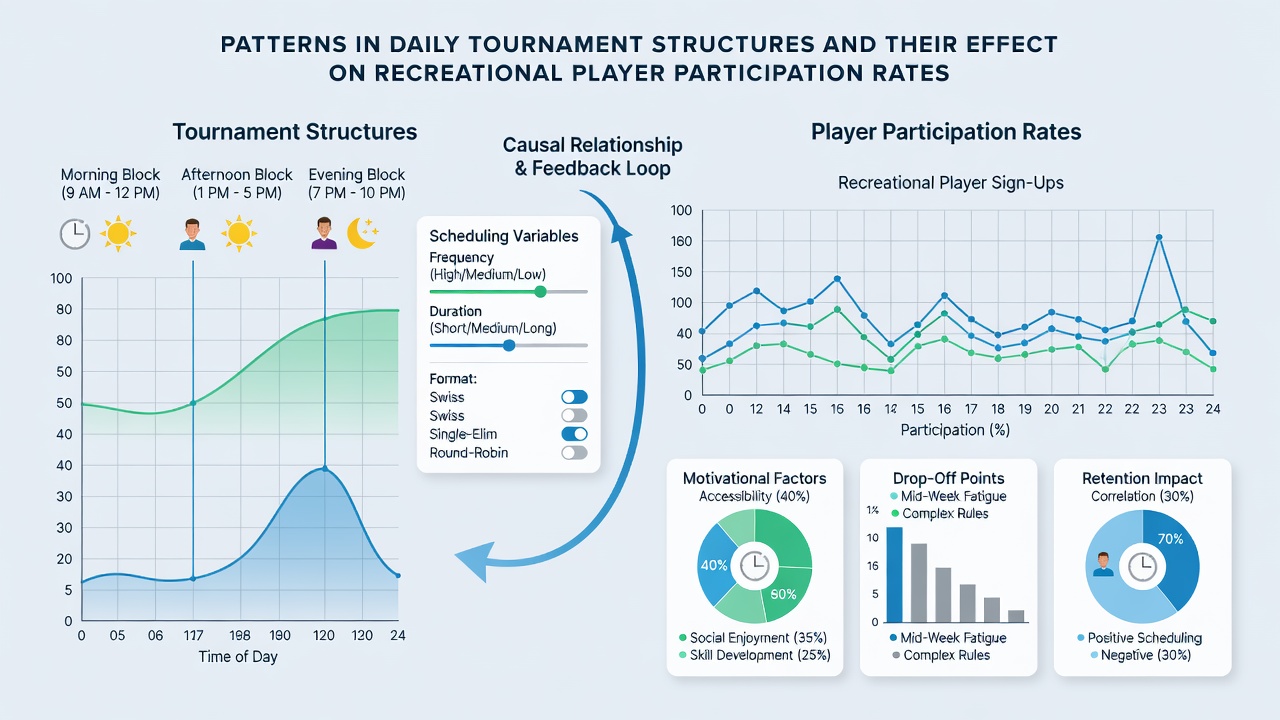
Guaranteed prize pools exert measurable influence on recreational registration rates, particularly when the advertised overlay exceeds 30 percent of the posted guarantee. Records from multiple North American properties show that daily tournaments carrying $5,000 guarantees on weekdays post higher recreational percentages than identical structures without guarantees, even when actual payouts remain comparable. Higher buy-in daily events, those above $200, consistently register lower recreational shares unless paired with satellite feeders that reduce the effective cost of entry.
Operators in the European Union have documented similar patterns through aggregated reporting required under national gaming statutes, where daily events priced between €50 and €100 maintain the widest recreational base across both urban and regional card rooms. When buy-ins climb above €150 without corresponding increases in starting stacks or level duration, the proportion of recreational participants declines measurably within two weeks of the price adjustment.
Format Innovations and Observed Registration Shifts
Progressive knockout daily tournaments have produced distinct registration curves compared with standard bounty events, with recreational players showing stronger initial uptake followed by quicker stabilization once the format becomes familiar. Venues that introduced PKO dailies in late 2025 recorded a 9 percent average increase in unique recreational identifiers over the subsequent six months, according to internal analytics shared with industry research groups. Turbo re-entry events scheduled on consecutive days generate carry-over effects, where players who cash on day one return at elevated rates on day two even when the guarantee remains unchanged.
Those monitoring cross-platform data note that online daily tournaments feeding into live events create additional participation pathways, particularly when the online phase occurs during daytime hours that recreational players can access from home or work. This linkage appears strongest in markets where regulatory frameworks permit seamless account transfers between digital and brick-and-mortar operators.
Conclusion
Patterns emerging from daily tournament structures demonstrate consistent relationships with recreational participation rates across multiple jurisdictions and formats, with timing, guarantees, and payout mechanics each contributing measurable effects. Continued tracking through June 2026 and beyond will clarify whether recent schedule experiments produce lasting changes in player behavior or merely temporary registration spikes.