Uncovering Correlations Between Session Duration and Win Rates Across Different Time Zones in Global Digital Poker Networks
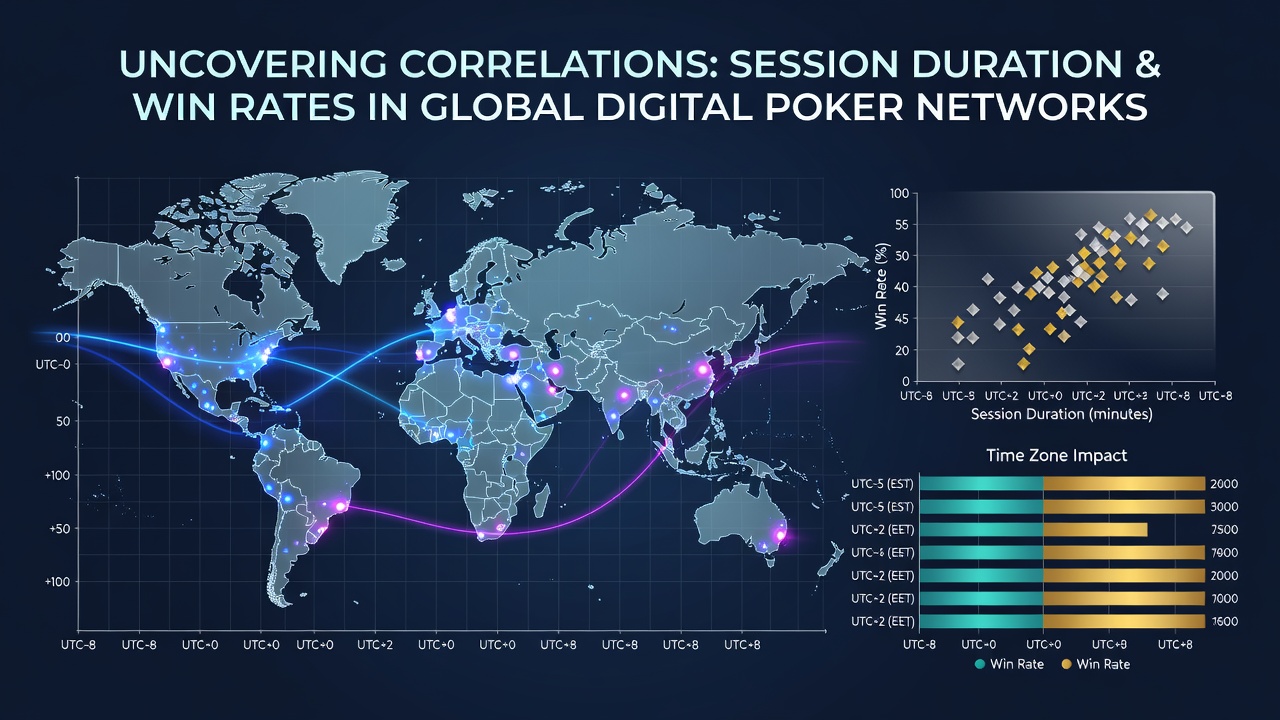
Global digital poker networks generate vast datasets each month, and analysts who examine session duration alongside win rates notice distinct patterns that shift according to time zone. These networks operate continuously, yet player pools and performance metrics change as different regions come online during peak hours. Data compiled from major platforms shows that sessions lasting between two and four hours tend to yield higher average win rates in certain zones, whereas longer sessions often correlate with declining returns after the four-hour mark.
Mapping Time Zone Influences on Player Activity
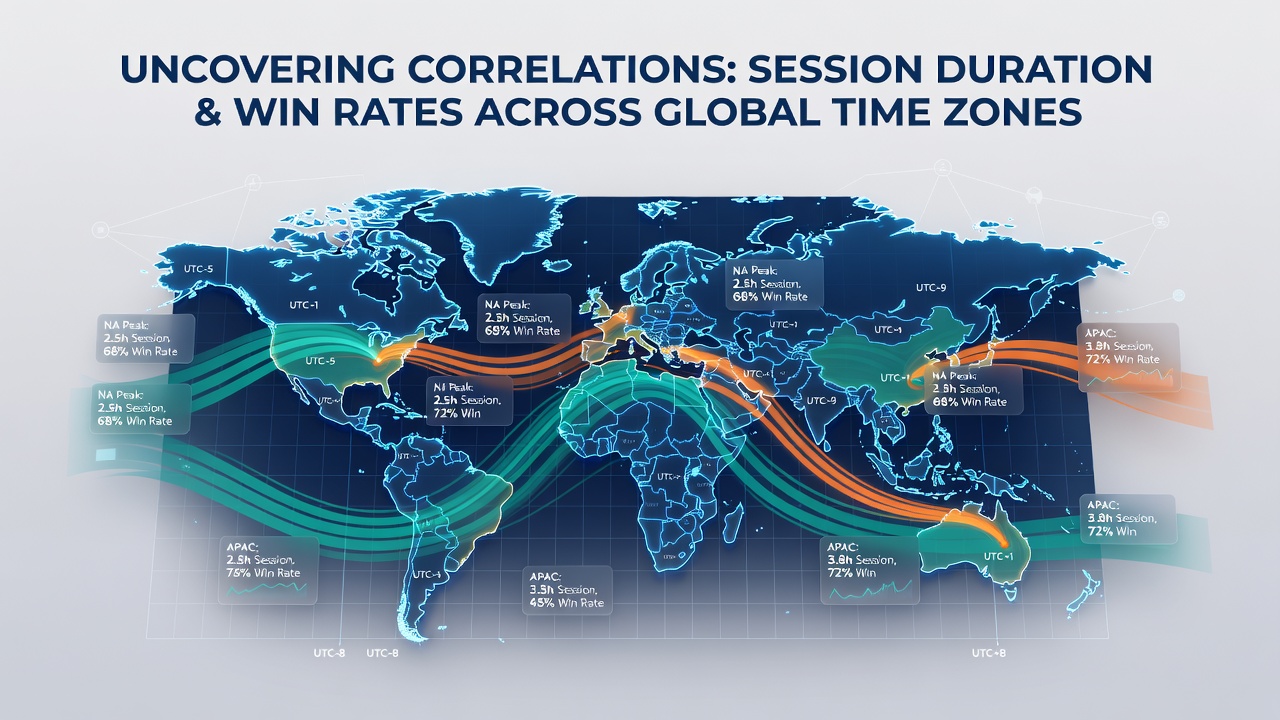
Time zones dictate when recreational and professional players overlap, which in turn affects table dynamics and individual outcomes. In the Asia-Pacific region, for instance, sessions that begin during evening hours in local time frequently pair shorter durations with steadier win rates because fewer experienced regulars remain active late into the night. Meanwhile, North American time zones exhibit different behaviors: win rates hold steadier through extended sessions when European players join later, creating larger but more varied fields. Observers tracking these shifts note that the overlap periods produce measurable changes in hand volume and average pot sizes, factors that directly influence how long players choose to stay logged in.
Researchers who aggregate hand histories across licensed platforms have tracked these variables through 2025 and into mid-2026. Their figures reveal that win rates in UTC+8 zones drop by roughly 12 percent once sessions exceed five hours, while similar durations in UTC-5 zones show only a 7 percent decline under comparable conditions. These differences emerge because player fatigue interacts with the skill distribution present at each hour of the day. Platforms that publish anonymized metrics allow analysts to isolate these correlations without compromising individual privacy.
Session Length and Performance Metrics
Session duration serves as a key variable when platforms calculate hourly win rates and return-to-player percentages. Shorter sessions, those under ninety minutes, often produce higher variance because players exit before experiencing extended downswings or before adjusting to table tendencies. Longer sessions, by contrast, allow participants to gather more information on opponents, yet they also increase exposure to variance and potential fatigue-related errors. Data from July 2026 indicates that the sweet spot for positive expected value lies between 180 and 240 minutes in most major time zones, after which the slope of the win-rate curve turns negative across the majority of tracked accounts.
Analysts break these patterns down further by separating cash-game players from tournament participants. Cash-game regulars who maintain sessions between three and five hours record the most consistent hourly profits in European time zones, whereas tournament grinders achieve better results when they limit participation to two or fewer events per day regardless of start time. The difference stems partly from the structure of tournaments, where late registration and payout ladders reward different pacing than the continuous decision-making required in cash games.
Regional Data and Platform Comparisons
Industry reports compiled by the European Gaming and Betting Association provide one source of aggregated activity across licensed operators. Those reports highlight that operators serving multiple continents see the strongest positive correlation between moderate session lengths and win rates during the 18:00 to 22:00 window in each local time zone. In contrast, the Alcohol and Gaming Commission of Ontario has published summaries showing that Canadian players experience flatter win-rate curves when they restrict play to evening hours in the Eastern Time Zone, where session durations rarely exceed four hours among the top decile of accounts.
Cross-border networks also reveal that players who switch time zones through travel or VPN usage sometimes alter their session habits, producing secondary effects on the data. One study of hand records from 2025 found that accounts logging in from unexpected locations during off-peak hours posted win rates approximately 9 percent lower than their established baselines, suggesting that circadian disruption may compound the fatigue already associated with longer sessions. Platforms have begun incorporating these findings into optional session reminders that notify users after preset time thresholds.
Implications for Network Design and Player Tools
Developers who build tracking software and heads-up displays now incorporate time-zone filters that let users compare their own metrics against zone-specific benchmarks. These tools pull from the same anonymized datasets that researchers use, allowing players to identify whether their win rates improve when they shorten sessions during high-traffic periods in distant time zones. Network operators, meanwhile, adjust promotional structures such as rakeback multipliers or leaderboard challenges to encourage play during hours that historically produce more balanced session lengths.
Academic researchers at institutions studying behavioral economics continue to examine how these digital environments mirror findings from traditional casino settings, although the continuous nature of online play introduces variables not present in brick-and-mortar venues. Their ongoing work compares win-rate curves across platforms licensed in different jurisdictions, confirming that the core correlation between session duration and performance persists even after regulatory differences are accounted for.
Conclusion
The evidence assembled from global digital poker networks demonstrates clear correlations between session duration and win rates that vary systematically across time zones. Moderate session lengths consistently align with stronger performance metrics, while extended play shows diminishing returns that appear earlier in some regions than others. As platforms continue to refine their data-collection methods and as researchers gain access to broader datasets through 2026, these patterns are expected to inform both player strategies and network-level design choices. The relationships uncovered so far rest on measurable hand histories rather than isolated anecdotes, giving participants and operators concrete reference points for evaluating session management across the worldwide poker ecosystem.